
Smartphone screens bathed our evening ride with a numbing glow.
A stream of memes, viral clips, and short-form media eases the struggle of a one-hour, 15-kilometer ride in a packed 16-seater van through the usual soul-crushing East Ortigas traffic. We’re tired, hungry, and probably, deep down inside, universally very angry. There are about a million reasons why we should go out in rage and protest the sordid condition of the working class. But nah...it’s easier to choose “peace” over rage, especially these days when it’s easier to find distractions. “Choose your battles,” they say. You can’t fight them all. And it’s mostly true. What are we fighting for anyway?

In a hurry, gathering news from field reporters for DZRH’s primetime newscast. I was 21 (or 22) and knew nothing of journalism or how the society works. Most importantly, I still had hair.
When I was younger, I was fighting for myself. Perhaps I wanted validation. Before leaving for better-paying jobs, I spent nearly a decade working in the news industry. I started as a desk assistant at the country’s oldest AM radio station. I remember making my first mistake. My boss humiliated me in front of everyone. He cussed me hard—questioned my education and even my qualifications. I wasn’t even a journalism graduate, right? That triggered me. I wanted to prove myself to these assholes. And proved myself, I did. But times were a-changin’ and social media was starting to become the main information platform.
I rode the wave of change. After a couple of years, I left radio for the country’s biggest newsroom to become a news social media manager. We had no idea what we were doing. There were a lot of trials and errors, and I had to keep up with fast-changing algorithms and policies. I ended up becoming a “digital news reporter,” a one-man (sometimes two) coverage team that’s ready to strike anytime, anywhere. Years working in news took me out of my petit bourgeois bubble. I’ve seen forms of oppression that I never thought existed. I found myself no longer fighting for myself.

Inside ABS-CBN’s “war room” before we began the 2016 election coverage that then Davao Mayor Rodrigo Duterte eventually won.
Questions led to answers that led to more questions, answers, questions, and eventually, rage. But I couldn’t just speak out on social media about this raging fire inside my heart…no, no, no. I was taught to contain my personal feelings and project an impartial face. We’re just “the messengers.” Worse, my work as a reporter coincided with Rodrigo Duterte’s presidency. I’ve seen Super Typhoon Yolanda’s (Haiyan) onslaught, numerous devastating earthquakes, long and arduous impeachment trials, and more, but nothing compares to Duterte’s regime. The killings, the weaponization of the law, political harassment and intimidation, blatant disrespect for human rights—we haven’t seen anything like this since the late dictator Ferdinand Marcos Sr. And Duterte was doing all this under a democratic structure in the guise of his holy war against illegal drugs.
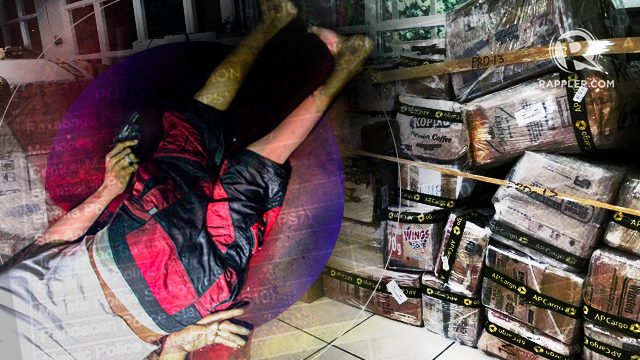
In Duterte’s early days as president, I was given the chance to “crawl” the streets of Manila for several nights to report on drug war cases—nothing fancy, just typical police reports. Just in the city of Manila, perhaps just a couple of districts of the capital, we were rushing from one dead body to another—maybe six bodies in seven hours or something like that. Each body was different. One suspect was on the ground face first, bullet at the back of the head. Another was on his side with his basketball shorts slightly pulled down, revealing his “kuyukot” (butt crack) mired with blood. The other one, already covered in newspapers when we arrived, had been riddled with bullets to the chest. All of them supposedly resisted arrest. The number of dead bodies I’d see wouldn’t stop there. As the drug war continued, I thought there were so many ways a gun could kill a person. I’d dream of the faces and the bodies sometimes. Post-work drinking sessions with colleagues became our improvised PTSD counseling sessions. That was the only time we could express our anger and disgust.

What was left of the crime scene after another supposed “firefight” between the police and drug suspects. It was just around midnight, and this was already the second or third body we’ve seen.
When I left news in 2019, I thought I finally had the chance to speak out against the regime’s bloody rule. I was out on the streets, educating myself about the plight of the masses, and joining efforts to organize a mass-based opposition. On social media, I’ve never been so vocal about my thoughts. I’ve tried to reason with trolls and engage with fascist-loving or reactionary friends. I was angry and rightfully so. But sooner than later, I found myself having to pour more of my energy into my corporate work. I had less time on the streets and more time learning about cost-efficient business models and whatnot. For a while, I may have set the fires aside, especially after the 2022 elections when the son and namesake of Marcos Sr. won as Duterte’s successor (and as their allies as well under the “unity” banner). I wanted to burn Malacanang to the ground in anger, but hey, “choose your battles,” they said. And I had more personal problems at the time as a 30-something balding old man. Bills, health, job security, debt, more bills, more debt—it seemed like I couldn’t get a break. The rage in me slept (but never died) until a week-or-so ago when Duterte appeared at a Senate inquiry into his drug war.
‘Shit happens’: Rekindling my rage
It was the morning of June 30, 2019, the Lord’s Day.
Two drug suspects in the town of Rodriguez (formerly Montalban), Rizal, realized they were dealing crystal meth (locally known as shabu) to an undercover agent, Sr. Master Sgt. Conrad Cabigao. According to the official police report, one of the suspects, Renato, immediately fired a gun, picked up his daughter Myka, and used her as a human shield as they tried to escape. More police came in as the sting operation turned into a gunfight. The two suspects were killed, as well as Cabigao. But the three-year-old kid also caught a fatal shot in the crossfire, the latest victim of then-President Rodrigo Duterte’s bloody war on drugs. Official autopsy reports found that the bullet that killed Myka entered her nape with an upward trajectory, piercing her brain before exiting her left ear. The report also found gunshot wounds in her left foot and right hand. The police couldn’t determine who exactly among the operatives fired the fatal shot. “Shit happens,” Senator Ronald dela Rosa told the press after the incident as he tried defending the police.
Five years later, Duterte is no longer president. Marcos Jr. is having a falling out with the Duterte family. The political climate allowed for congressional probes into Duterte’s war on drugs. But in the Senate, Dela Rosa and other allies remained seated giving Duterte a layer of defense. So, when a priest representing drug war victims brought up Dela Rosa’s 2019 no-apologies apology over Myka’s death, the senator fumed like a madman. "What's the fuss about my statement? Our operations aren't perfect. We couldn't control the environment. What should I say, 'perfection happens'? There are no perfect operations. Sometimes shit happens. That's what I said. That wasn't meant to degrade the soul of the departed. The problem with you, father, is you're trying to capitalize on my words as propaganda. That's bad, father," the former drug war maestro said.
If we were to believe Dela Rosa, “shit” refers to cases where the police had to fire back at armed suspects in self-defense. In Tagalog, they call it “nanlaban” (literally translates to fought back), the favorite word of cops to justify killings in the name of Duterte’s drug war. Well, there’s nothing wrong with self-defense, right? But can you actually believe that in Duterte’s six years in power, around 7,000 suspects fought back in a drug-bust operation (compared to 50 cops killed in 3 years)? In fact, in Duterte’s first year, ABS-CBN News reported 3,581 drug-related fatalities. That’s 300 suspects killed a month in just one year. When “shit happens” once or twice, that’s probably an accident. But when “shit happens” 300 times a month? That’s probably bullshit. Those numbers are even conservative. Some monitoring bodies estimate the death toll of Duterte’s drug war at around 27,000, including those killed by mask-wearing, motorcycle-riding vigilantes with alleged ties to the police.
It was Dela Rosa who called for a Senate inquiry into the drug war, a bloody campaign he passionately led and defended during his time as national police chief. The inquiry, in the first place, wasn’t about uncovering truths—it was about Dela Rosa defending himself and his beloved boss, Duterte, against incriminating testimonies during a separate probe at the House of Representatives. Duterte has been invited to the House hearing, but he politely declined because he “wasn’t feeling well.” But he looked mighty fine when he appeared at the Dela Rosa-backed Senate inquiry.
My expectations for this hearing had been low. I knew it was going to be a show. I mean, look at the attending senators, Dela Rosa, Bong Go (who may have been closer to Duterte than the former president’s wife), Robinhood Padilla, convicted plunderer Jinggoy Estrada, political turncoat Francis Tolentino, and Joel Villanueva who never had the balls to call Duterte out. Worse, leading the inquiry was Koko Pimentel, a former party-mate of Duterte. Risa Hontiveros was the only senator bound to question Duterte. I knew this hearing would trigger me. But I felt I needed to feel that rage again. I needed to be human again—one that exists beyond the comforts of my hybrid work setup at home. And boy did this hearing deliver.
A Senate hearing to unhear
Duterte’s camp requested that he be given the courtesy to deliver an opening speech.
Nothing wrong with that, of course, as most resource persons get that privilege when attending congressional inquiries. Pimentel agreed as expected. Duterte thanked the Senate for the invitation and proceeded with an uninterrupted twelve-minute speech that contained the usual things that he had already said a billion times during those code-switching, expletive-ridden late-night stream-of-consciousness blabbers: I hate drugs. I did what he had to do to rid the nation of drugs. I gave the police his blessing to shoot aggressive drug suspects. I take full legal responsibility for what the police did pursuant to my order. Blablabla, blablabla, blablabla. We all know this shtick by now.
Then, it was the turn of the kin and advocates of the drug war victims. The uncle of slain teenager Kian delos Santos spoke first. He was followed by Cristina Gonzales, a drug war survivor who talked about how she and her slain husband were selling meth they got from the police during Duterte’s drug war. There was Fr. Flavie Villanueva, a priest representing drug war survivors. He talked about the experience of the victims and how Dela Rosa “shit happens” statement summarizes the accountability we got from government forces. Former Senator Leila de Lima, who was jailed and severely maligned by Duterte, was also allowed to talk briefly. Human rights lawyer Chel Diokno was also allowed to speak for a few minutes. Dela Rosa kept on chiming in, interrupting and shifting the blame on the victims—You should’ve filed a case. Why didn’t you file a case? Your statements are mere propaganda. This will be a recurring theme throughout the show.

Duterte loved mansplaining. This photo, taken after his 2017 State of the Nation Address, shows him silencing the crowd outside the Batasan building. He grabbed the mic and spoke over the chants of the people, mansplaining his way through the night.
The next five hours revolved primarily around Duterte and Dela Rosa, architects of the drug war. They kept on speaking over resource persons and senators. During the hearing, Duterte made it clear that he had repeatedly instructed the police to provoke drug suspects into resisting arrest so they could justify shooting them. Duterte admitted that he had a death squad in Davao. Dela Rosa dismissed these statements, made under oath, as a joke—a hyperbole. A passionate Duterte insisted that he alone was responsible for the police actions carried out under his drug war orders. He proudly touted his campaign as a success, “like Davao.” Dela Rosa even brought in a witness to undermine the House inquiry, attempting to discredit the incriminating testimonies against Duterte, his allies, and their so-called drug war. It became a show where drug war implementer Dela Rosa was asking drug war architect Duterte leading questions to defend their campaign. A goddamn circus.
“They didn’t get it,” Duterte said.
“I know, right?” Dela Rosa responded.
But all the macho-shit left Duterte’s body when Senator Hontiveros was given a brief time to ask some questions, the first one being, “Do you take responsibility for the killing of Kian delos Santos?” For context, Kian’s case was deemed a murder by Duterte’s police, who were actually acting pursuant to his orders. Kian wasn’t resisting arrest, and the police made every damn way to make him resist. Thank goodness a CCTV camera caught the incident. Duterte balked. He tried to grasp for words, mumbled for a second, and proceeded to make a complete U-turn from what he said earlier about taking responsibility. He responded with a string of expletives to evade the question. Pimentel, of course, did not press for an answer and moved to quicken the pace so the “old and ill” Duterte could go home. The Senate inquiry, in a nutshell, became a platform for Duterte to reinforce old lies and intimidate drug war victims. “File a case against me if you’re so confident about your claims,” Duterte dared the victims.
Filing a case vs Duterte isn’t that simple

A placard saying: “Justice, not bullets.” Photo taken for ABS-CBN News during the funeral march of Kian delos Santos.
It was raining the night before Kian was laid to rest.
The family, trying to be optimistic despite their ordeal, believed it was a sign of blessing from the heavens. I had been covering Kian’s case for that week. At night, I had to stay over until his funeral march in the morning. I explored the labyrinths of Kian’s neighborhood. Everyone knew the 17-year-old as a helpful boy around the area. Many knew Kian because he used to man their little store when he was not in school. “We were the addicts here. Why was he the one who got killed,” a neighbor told me casually as I sought everyone’s thoughts about what happened. Despite the rain, loved ones flocked to Kian’s last night. Many of them were just teenagers. Kian, they recalled, had always been a class clown. But when it comes to his studies, he was always serious. “We’re sad and angry, but we’re also fearful,” said the senior high students. I asked to clarify: Fearful of addicts or cops? “Both. They’re the same to us now,” they told me.
Fear was Duterte’s tool. Against drug users and addicts? Sure. But it’s not limited to drug suspects. Fear was Duterte’s tool against everyone who dared question him. When Kian’s uncle spoke at the Senate hearing, Dela Rosa made a manifestation and claimed that Kian’s father was an addict anyway just because he looked like a drug user. Imagine hearing this from the top leader of the national police just after Duterte told his cops to kill drug suspects or make the fight, so you got an excuse to kill them. Would you have the courage to file a case or anything against that slandering remark? Just defending Kian’s father would give online trolls a reason to tag you as a drug user, sympathizer, or coddler. You’d fear for your life before you could talk.
Fear was also the tool Duterte used against farmers, advocates, and activists who dared question his policies. And it’s not witless fear because Duterte’s threats were serious. How many human rights advocates, peasant leaders, and other activists were killed during his time? Randy Echanis was old and ill when he was killed. Zara Alvarez followed just a week after Randy’s killing. Teacher Chad Booc was riddled with bullets. They were all red-tagged, accused of being “terrorists.” There were dozens more, maybe hundreds, named and unnamed—some of them were killed, some jailed. It wasn’t just fear that Duterte used. It was terror. He was THE terrorist.
A culture of impunity
It’s not just terror that would dissuade anyone from filing a case against Duterte. It’s the system itself.
For one to build a solid case against Duterte, you need all the police reports you can gather to substantiate your claims. But even police reports were doctored during their time.
I remember doing a story on “Tisoy,” a young man detained because of being a shirtless “tambay” on the streets of Quezon City. He was mauled to death inside his cell, just a few steps away from where the chief of the precinct was sitting. This cop gave me his signed official police report that said Tisoy was crazy and he banged his head to the wall until he died. I remember him smirking while telling me that story. When the autopsy showed otherwise, and the news made rounds on social media, he texted me and told me that he had given me the wrong report, and I had to meet him that night so he could give me the “correct one.” Of course, I didn’t go.

The police officer who tried to cover up Tisoy’s death was relieved from his position. But it’s a sick justice system we have. Tisoy’s family didn’t pursue a case for fear of retaliation from the influential police officer. And this cop, who definitely has blood on his hands, was able to come back to the force, eventually becoming the top police official of Olongapo City.
There were many instances where the police reports were filled with fabricated stories to justify the killings. Fr. Flavie Villanueva told a news podcast that many of the survivors were threatened by the very police officials they needed to file a solid case. Even the extremely defensive police organization insisted on investigating the cases on their own. And what do we get when we let them do that? Thousands of “deaths under investigation” remain unsolved despite solid testimonies, revealing reports, and strong sets of evidence.
And when you need our institutions like the Senate to work and make Duterte answer to all his sins, you get a televised circus with a bunch of clowns dressed as lawmakers. Perhaps what the Senate hearing showed everyone is that up until now, Duterte’s influence in the government is still strong, and any case you file against him in this broken justice system may not really go that far because of prevailing impunity. If any, the circus that we watched in the Senate solidifies the case for an intervention from the International Criminal Court. This may be the only fair chance we have for justice.
Rage on
Here I am, whining in a rage about the ills of society in a posh café east of Manila like a true fucking hypocrite.
I’m in my mid-30s, on the verge of losing all my hair, and maybe adding more maintenance meds as I grow older. Really, what am I fighting for—human rights, justice, peace? I’ve got tons of problems, bills, and debts—shouldn’t I just focus on my own shit than blabbering on things I couldn’t really control?
Yes, I need to juggle multiple jobs to pay for my bills. I need to be good at work so I can get better pay. I need to keep myself healthy. I need to become a son to my parents and a “kuya” (older brother) to my siblings. I need to become a friend to the small group of people I have in my life. I want to live a life, too, after all the challenges this past year. These are the things I must fight for.
But it doesn’t mean that this fight exists in a vacuum. If there’s one thing I’ve learned over the years, it’s that nobody ever lives in isolation. My fight for a better life is the same fight of the broader masses for a better life. We have the same enemies—the same systemic corruption, the same culture of impunity, the same landgrabbers, the same political dynasties, the same exploitative imperialists.
So, by all means, let us fight for our dreams and loved ones—but let us do it together; let us fight with and for each other. It doesn’t always have to be grand. Learning to leave our bubble and educating ourselves about the struggles of others—may it be about the Palestinians in Israel-occupied Gaza, the orphans of the drug war, the officemate silently fighting her inner demons, or that fellow commuter who’s about to become jobless as his contract ends.
Let us rage. Let us understand each other’s rage. Let us share our rage. One day it will be big enough to make a dent. I may not be in the best shape or headspace to go back on the streets. But I’m trying to fix things. I’ll be back. But for today, I’ll have to hold on to this rage, keep it alive and burning.